Water Extraction & Removal in Modesto, CA
Every hour water sits, it moves deeper into pad, subfloor and drywall. Modesto water damage pros pull it out first, then set drying to the IICRC S500 standard.
Water on the floor now? Start extractionOpen 24/7: (888) 774-9605
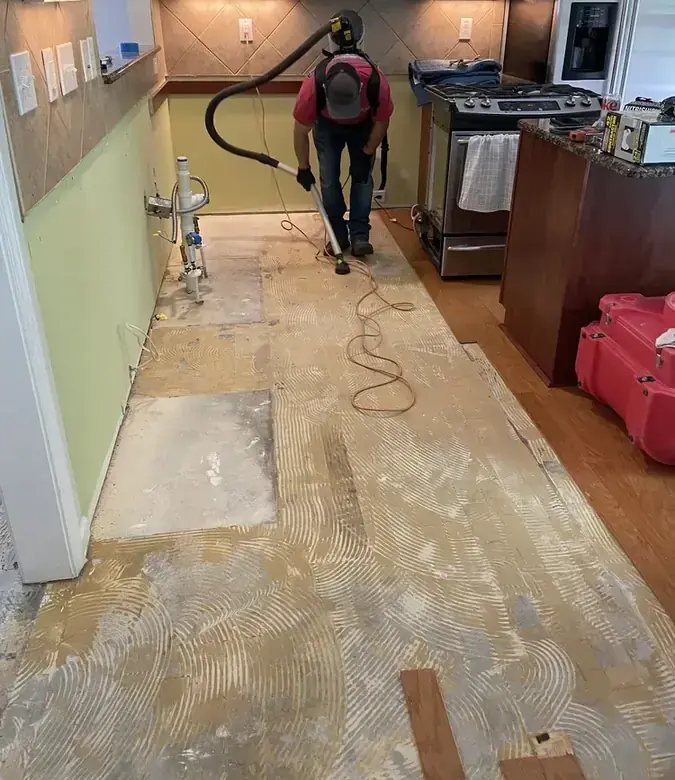
First steps for water extraction and removal in Modesto
Stop the source
Shut the main valve or the fixture valve if it is safe to reach. Most Modesto mains sit near the front hose bib or at the curb box.
Kill power to wet areas
Switch off breakers for rooms with standing water if the panel is dry and you are standing somewhere dry.
Lift what you can
Move rugs, electronics and furniture off the wet floor. Put foil or blocks under furniture legs that stay.
Photograph, then call
Take wide photos of every wet room before anything moves, then call so extraction starts early.
What does water extraction and removal cost in Modesto, CA?
In Modesto, CA, water extraction and removal typically runs $600 to $4,500, depending on how many rooms are wet, whether carpet and pad are involved, the water category and whether a crawlspace needs pumping.
One room, clean water
$600 to $1,400- Truck-mount extraction
- Pad check and removal
- Moisture map
Several rooms or a hallway
$1,400 to $3,000- Extraction across rooms
- Carpet lifted and floated
- Drying set-up
Whole floor or crawlspace
$3,000 to $4,500+- Submersible pumps
- Debris removal
- Extended drying
These are typical ranges, not a quote. The water category, the square footage, the material class and how fast drying started move the number most. Try the water damage cost calculator for a planning range.
What a proper water extraction and removal job includes
The order of the work is what separates a finished dry-out from a cosmetic one.
Rapid local response
The response team picks up around the clock and sends the closest available crew with pumps, meters and drying gear.
IICRC S500 drying standard
Moisture mapping comes first, and the equipment stays until the readings match a dry reference, not until the room looks dry.
Claim-ready documentation
Most crews log daily moisture readings and take timestamped photos before anything is torn out, so the file matches the loss.
Central Valley water experts
Slab leaks, crawlspaces, attic air handlers and winter storm water are the everyday losses for Modesto water damage pros.
Extraction is the cheapest part of any dry-out and the part that saves the most. A gallon pulled out as liquid never has to be evaporated out of the air later, so the extraction crew works the floor hard before a single air mover goes down.
Why extraction comes before drying
Air movers and dehumidifiers remove water slowly, a few pints at a time. A truck-mounted unit pulls hundreds of gallons in the same time. That is why the restoration contractor who responds treats extraction as the foundation of the job:
- Carpet and pad are extracted with weighted tools that squeeze water out of the pad, not just the surface
- Hard floors, tile and bare slab get squeegees and wands until no standing water shows
- Water under cabinets and toe kicks is reached with low-profile tools before it wicks into the base
- Crawlspace and garage water gets pumped with submersible pumps where a hose can reach
What Modesto homes usually need
Most calls in Modesto start at a slab tract home with carpet, laminate or tile, or at an older raised-foundation house where water can drop through the floor into the crawlspace. The tech who does the walkthrough checks both: the room you can see and the space under it. In newer north Modesto homes the water often runs along the slab toward the lowest wall, so the crew follows it with a meter instead of stopping at the wet spot you noticed. If the water came from a slab leak, extraction happens while a plumber isolates the line.
Carpet, pad and what can be saved
Clean water on carpet can often be saved when extraction starts quickly. The pad under it usually cannot, because it holds water like a sponge and breaks down once wet. Gray or sewage water changes the answer: porous materials touched by Category 3 water get removed, not dried. The Federal guidance at Ready.gov and the indoor air notes at EPA Indoor Air Quality explain why contaminated materials come out. After extraction, the job moves to structural drying.
The trade fact that matters
IICRC S500 treats extraction as the most efficient water removal step. Crews measure how much water came out and log it, because the drying plan for each room is sized to what is left.
How water extraction and removal is handled in Modesto
- 01
Call and triage
The restoration team asks where the water came from, which rooms are wet and whether it is clean, gray or sewage water, then sends a crew.
- 02
Map the moisture
The tech who does the walkthrough uses a thermal camera and pinless meters to map every wet wall, floor and cavity before any equipment goes down.
- 03
Extract and set drying
The extraction crew pulls standing water, then sets air movers and LGR dehumidifiers to the evaporation load of each room.
- 04
Read daily, then verify dry
Most crews record readings every day and pull equipment only when wet materials sit within 2 to 4 points of a dry reference in the same building.
Covering Modesto and Stanislaus County
The Modesto water damage pros take calls from every Modesto ZIP, from Village One down to the Airport District, plus Ceres, Salida, Riverbank, Empire, Hughson, Oakdale and Turlock.
See every neighborhood and ZIP coveredWater Extraction and Removal questions in Modesto
How fast should water extraction start?
As early as possible. Clean water starts turning into a worse category the longer it sits, and pad, drywall and subfloor keep soaking it up. The 24 to 48 hour window is when mold can begin, so extraction and drying inside that window protect the most material.
Can a shop vac do the same job?
A shop vac removes surface water but cannot pull water out of carpet pad or from under flooring. Truck-mounted and weighted extraction tools remove far more water, which shortens the drying time and lowers the cost of the job.
Will my carpet be saved?
Often, if the water was clean and extraction started quickly. The pad under the carpet is usually replaced. Carpet touched by sewage or flood water is removed, because porous materials hit by Category 3 water are not dried and reused.
Does extraction happen in the crawlspace too?
Yes when water dropped through the floor. The extraction crew pumps standing water from the crawlspace, pulls wet insulation if needed and dries the subfloor from below as well as above.
Is water extraction covered by insurance?
Extraction for a sudden and accidental discharge, such as a burst supply line, is often part of a covered water claim. Coverage depends on your policy, so it is worth checking with your own insurer. Photos and moisture readings help the adjuster see the loss.
What happens after the water is out?
The drying phase begins. Air movers and LGR dehumidifiers are set to the evaporation load of each room, and readings are taken daily until the materials match a dry reference in the same building.
Standing water in a Modesto home?
The longer it sits, the more comes out of the walls later. Call and get extraction moving.