Structural Drying & Dehumidification in Modesto, CA
Dry to the touch is not dry. Modesto water damage pros dry framing, subfloor and wall cavities until the readings match a dry reference in the same house.
Still damp days later? Get it dried to standardOpen 24/7: (888) 774-9605
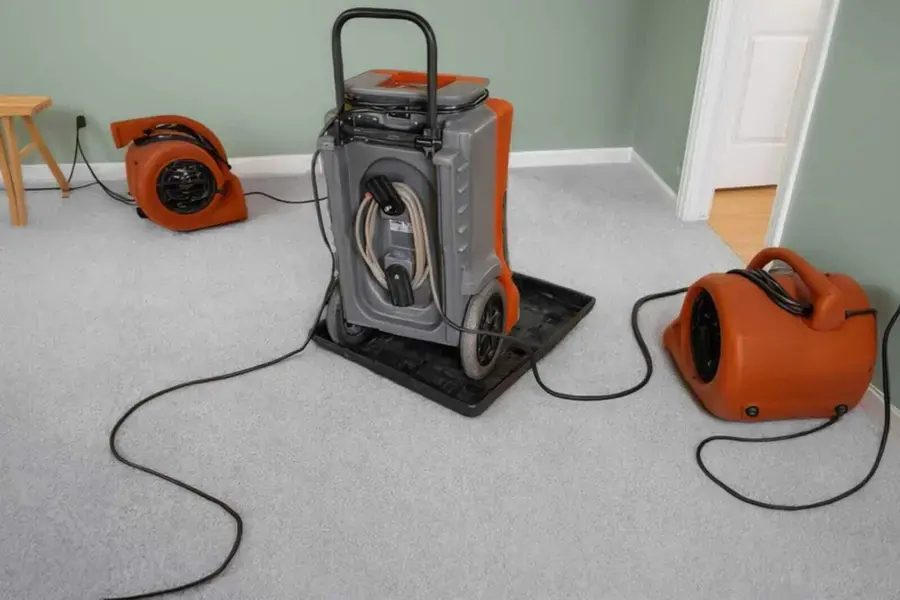
First steps for structural drying and dehumidification in Modesto
Stop the water source
Drying cannot finish while water is still coming in, so the leak or break gets fixed first.
Leave the equipment running
Air movers and dehumidifiers work around the clock. Turning them off at night adds days.
Keep doors and windows as set
The crew sets the room for drying. Opening windows on a humid or rainy day can slow it down.
Let the readings decide
Ask to see the daily readings. Equipment should come out when they match the dry reference, not on a set date.
What does structural drying and dehumidification cost in Modesto, CA?
In Modesto, CA, structural drying typically runs $1,000 to $6,500 for a residential loss, depending on the number of rooms, the class of water, the materials involved, whether wall cavities need injection drying and how many days of equipment the job needs.
One or two rooms
$1,000 to $2,200- Moisture map
- Air movers and one LGR unit
- Daily readings
Several rooms, wall cavities
$2,200 to $4,500- Cavity injection drying
- Multiple dehumidifiers
- Psychrometric logs
Slab, hardwood or Class 4
$4,500 to $6,500+- Desiccant dehumidifiers
- Floor mats
- Extended monitoring
These are typical ranges, not a quote. The water category, the square footage, the material class and how fast drying started move the number most. Try the water damage cost calculator for a planning range.
What a proper structural drying and dehumidification job includes
The order of the work is what separates a finished dry-out from a cosmetic one.
Rapid local response
The response team picks up around the clock and sends the closest available crew with pumps, meters and drying gear.
IICRC S500 drying standard
Moisture mapping comes first, and the equipment stays until the readings match a dry reference, not until the room looks dry.
Claim-ready documentation
Most crews log daily moisture readings and take timestamped photos before anything is torn out, so the file matches the loss.
Central Valley water experts
Slab leaks, crawlspaces, attic air handlers and winter storm water are the everyday losses for Modesto water damage pros.
Structural drying is the part of a water loss that decides whether the problem comes back. Wet framing, subfloor and the inside of wall cavities can look fine while they still hold enough water to warp, smell or grow mold later.
Moisture mapping comes first
Before any equipment goes down, the tech who does the walkthrough maps the wet area with a thermal camera, pinless meters and pin meters where needed. The map records:
- Which walls, floors and ceilings are wet and how far up the water wicked
- The material in each area, from drywall to hardwood to concrete slab
- A dry reference reading from an unaffected part of the same building
- The class of the loss, which sets how much equipment each room needs
The equipment and why it is placed where it is
Air movers push dry air across wet surfaces so water evaporates. LGR (low grain refrigerant) dehumidifiers pull that water back out of the air so it does not settle somewhere else. Desiccant dehumidifiers take over for Class 4 materials such as concrete and dense hardwood, and in cooler crawlspaces. Wall cavities are dried with injection systems or small access holes rather than tearing walls out when the water was clean. Modesto's dry summer air helps outdoor drying but not indoor drying, because a closed, air-conditioned house still needs dehumidifiers to hit the goal. Drying starts right after water extraction.
Daily readings and the drying goal
Most crews record temperature, relative humidity and moisture readings every day. Equipment is moved as areas dry and comes out when wet materials read within 2 to 4 points of the dry reference. Those psychrometric logs become part of the claim file. The EPA indoor air quality pages explain why materials must be fully dry before they are closed up, and OSHA flood cleanup guidance covers safety during drying and removal.
The trade fact that matters
Class 1 through 4 under IICRC S500 describes how much water the materials absorbed and how hard they are to dry. It sets the number of air movers and dehumidifiers per room, which is why two rooms of the same size can need very different set-ups.
How structural drying and dehumidification is handled in Modesto
- 01
Call and triage
The restoration team asks where the water came from, which rooms are wet and whether it is clean, gray or sewage water, then sends a crew.
- 02
Map the moisture
The tech who does the walkthrough uses a thermal camera and pinless meters to map every wet wall, floor and cavity before any equipment goes down.
- 03
Extract and set drying
The extraction crew pulls standing water, then sets air movers and LGR dehumidifiers to the evaporation load of each room.
- 04
Read daily, then verify dry
Most crews record readings every day and pull equipment only when wet materials sit within 2 to 4 points of a dry reference in the same building.
Covering Modesto and Stanislaus County
The Modesto water damage pros take calls from every Modesto ZIP, from Village One down to the Airport District, plus Ceres, Salida, Riverbank, Empire, Hughson, Oakdale and Turlock.
See every neighborhood and ZIP coveredStructural Drying and Dehumidification questions in Modesto
What is structural drying?
It is drying the building itself, meaning framing, subfloor, wall cavities and slab, not just the surfaces you can see. It uses moisture mapping, air movers, dehumidifiers and daily readings to reach a measured dry goal.
What does IICRC S500 mean?
IICRC S500 is the industry standard for professional water damage restoration. It sets out how water is categorized, how drying is planned and measured, and when materials are removed instead of dried.
How long does structural drying take?
A contained Class 1 or 2 loss usually dries in three to five days. Hardwood, plaster, concrete and multi-layer floors take longer. The readings decide, not the calendar.
Why are there so many machines in one room?
The class of the loss and the evaporation load of each room set the number of air movers and dehumidifiers. Too little equipment lets water move into dry materials and stretches the job.
Can I turn the equipment off at night?
It is best not to. Drying depends on steady airflow and dry air. Turning equipment off lets humidity climb back up and adds days to the job.
How do I know the house is really dry?
Ask for the drying log. It shows the dry reference reading and the daily readings on each wet area. The job is done when wet materials are within 2 to 4 points of that reference.
Walls or floors still damp?
Surface dry is not structure dry. Call and get readings taken.