Hardwood Floor Water Damage in Modesto, CA
Wet hardwood swells, cups and pulls apart if it is left to dry on its own. Modesto water damage pros dry it slowly and measure it, so more of the floor can stay.
Floor cupping? Get the wood dried rightOpen 24/7: (888) 774-9605
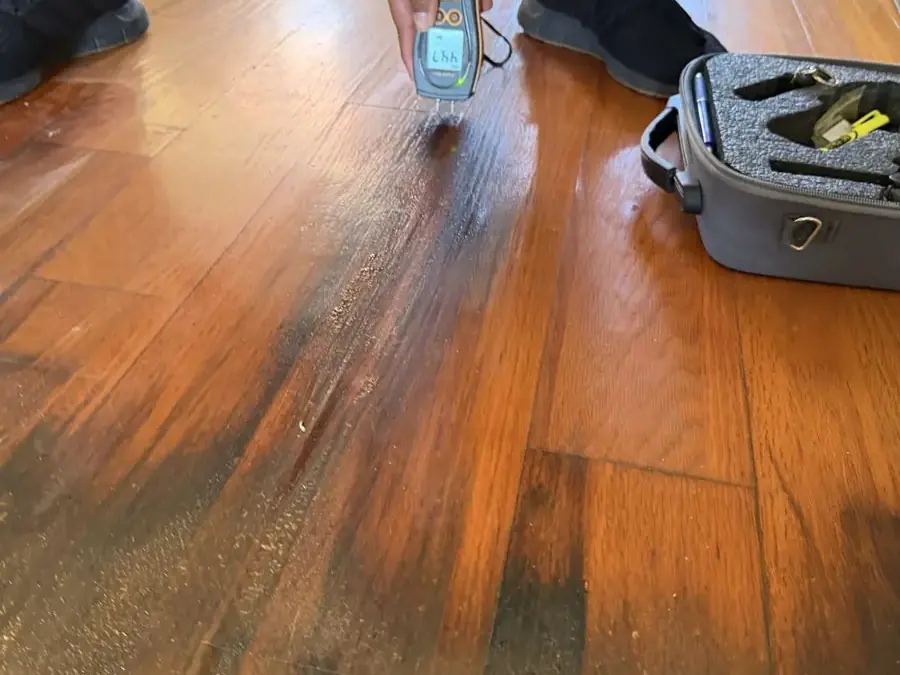
First steps for hardwood floor water damage in Modesto
Stop the water
Close the source or the main. Do not wait to see if the floor dries by itself.
Pull rugs and furniture
Lift area rugs and move heavy furniture off the wet boards so they can release moisture.
Do not sand or seal
Leave the floor alone. Sanding or refinishing a wet floor locks in crowning.
Photograph and call
Photograph the cupping or gaps with a coin or ruler for scale, then call for drying.
What does hardwood floor water damage cost in Modesto, CA?
In Modesto, CA, hardwood floor drying typically runs $1,200 to $6,000, depending on the size of the wet area, how long the floor soaked, whether drying mats and crawlspace drying are needed, and whether any boards must be replaced.
One room, caught early
$1,200 to $2,500- Surface extraction
- Floor drying mats
- Daily wood readings
Several rooms
$2,500 to $4,500- Mats across rooms
- LGR dehumidifiers
- Crawlspace drying below
Buckled or contaminated
$4,500 to $6,000+- Board removal
- Subfloor drying
- Documentation for repair
These are typical ranges, not a quote. The water category, the square footage, the material class and how fast drying started move the number most. Try the water damage cost calculator for a planning range.
What a proper hardwood floor water damage job includes
The order of the work is what separates a finished dry-out from a cosmetic one.
Rapid local response
The response team picks up around the clock and sends the closest available crew with pumps, meters and drying gear.
IICRC S500 drying standard
Moisture mapping comes first, and the equipment stays until the readings match a dry reference, not until the room looks dry.
Claim-ready documentation
Most crews log daily moisture readings and take timestamped photos before anything is torn out, so the file matches the loss.
Central Valley water experts
Slab leaks, crawlspaces, attic air handlers and winter storm water are the everyday losses for Modesto water damage pros.
Many older Modesto homes in the College Area, La Loma and around Graceada Park still have original oak floors, often over a raised foundation. Newer homes add engineered wood over slab. Both react to water quickly, and both reward careful drying.
Cupping, crowning and buckling
Wood swells when it takes on water. How it swells tells the drying team where the water is:
- Cupping: board edges rise higher than the centers, a sign of moisture from below
- Crowning: centers rise higher than the edges, often from sanding a floor that was still wet
- Buckling: boards lift off the subfloor, which usually means the floor soaked for a long time
- Gaps: boards that shrink back after drying too fast or too far
How hardwood is dried
Hardwood is a dense, Class 4 material under IICRC S500, so it gives up water slowly. The extraction crew first pulls surface water with specialty floor tools, then lays drying mats that draw water up out of the boards under vacuum. LGR dehumidifiers keep the room air dry, and in raised-foundation homes the crew dries the crawlspace under the floor as well. Readings on the boards and on a dry section of the same floor show progress each day. Sanding and refinishing wait until the wood is back to its normal range, which is how crowning is avoided.
When boards come up
Boards touched by sewage or flood water are removed, because porous materials hit by Category 3 water are not dried and reused. Engineered wood with a thin veneer can delaminate and may not survive a long soak. Documenting the floor before removal matters for the claim, and the California Department of Insurance explains how to document contents and flooring. The EPA indoor air quality pages cover why wet flooring should not be sealed up while damp.
The trade fact that matters
Wood flooring is dry when its moisture content matches unaffected flooring in the same house, not a number on a chart. Crews take that dry reference reading on day one.
How hardwood floor water damage is handled in Modesto
- 01
Call and triage
The restoration team asks where the water came from, which rooms are wet and whether it is clean, gray or sewage water, then sends a crew.
- 02
Map the moisture
The tech who does the walkthrough uses a thermal camera and pinless meters to map every wet wall, floor and cavity before any equipment goes down.
- 03
Extract and set drying
The extraction crew pulls standing water, then sets air movers and LGR dehumidifiers to the evaporation load of each room.
- 04
Read daily, then verify dry
Most crews record readings every day and pull equipment only when wet materials sit within 2 to 4 points of a dry reference in the same building.
Covering Modesto and Stanislaus County
The Modesto water damage pros take calls from every Modesto ZIP, from Village One down to the Airport District, plus Ceres, Salida, Riverbank, Empire, Hughson, Oakdale and Turlock.
See every neighborhood and ZIP coveredHardwood Floor Water Damage questions in Modesto
Can a cupped hardwood floor go back to flat?
Often, if drying starts quickly and the floor is dried slowly and evenly. Many cupped floors flatten once they return to their normal moisture range. Floors that buckled or soaked for a long time are more likely to need boards replaced.
How long does hardwood take to dry?
Hardwood is slow. Surface-wet boards may dry in several days, while floors that soaked from below can take one to two weeks. Readings against unaffected flooring decide when drying ends.
Should I sand the floor to flatten it?
Not while it is wet. Sanding a cupped floor before it dries is what causes crowning later. Refinishing waits until the readings say dry.
What are hardwood drying mats?
They are panels sealed to the floor and connected to a vacuum system that pulls moisture up out of the boards. They speed up drying without pulling the floor.
Is engineered wood dried the same way?
The method is similar, but engineered wood has a thin veneer that can separate after a long soak. Some engineered floors are dried successfully; others are replaced.
Is hardwood floor damage covered by insurance?
Sudden water damage to flooring is often covered, but repairs for long-term leaks may not be. Coverage depends on your policy, so it is worth checking with your own insurer.
Hardwood floor lifting or cupping?
Slow, measured drying is what saves boards. Call before anyone sands it.