Slab Leak Water Damage in Modesto, CA
A pinhole in a copper line under the slab can soak flooring for weeks before it shows. Modesto water damage pros trace the wet area and dry it while the leak is repaired.
Warm, wet floor? Get the slab driedOpen 24/7: (888) 774-9605
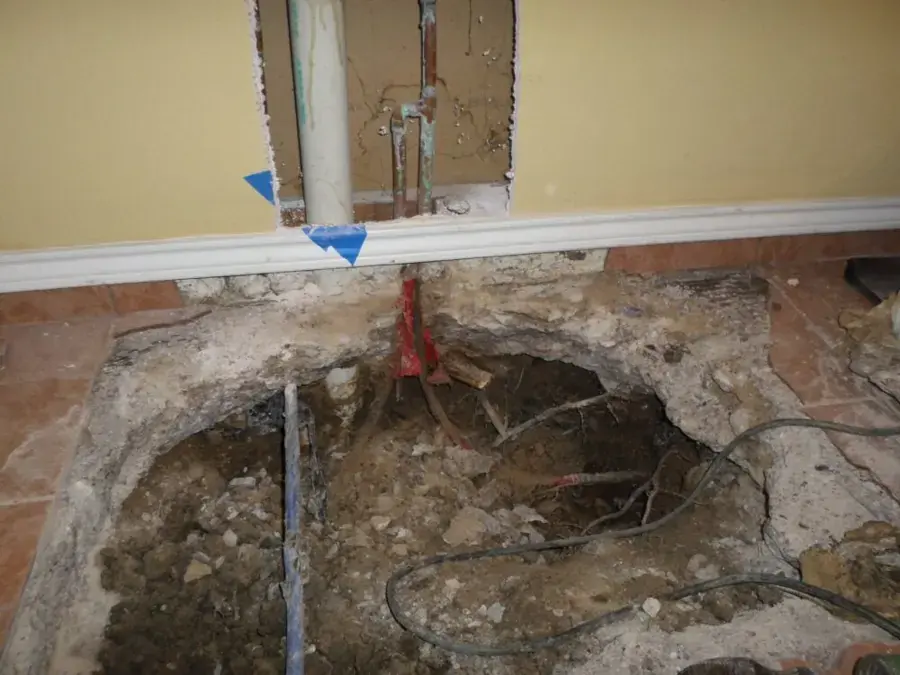
First steps for slab leak water damage in Modesto
Check the meter
Turn off every fixture and watch the water meter. If it still moves, water is escaping somewhere.
Shut off the main
If a floor is visibly wet or warm and the meter is moving, close the main to stop the leak.
Pull back what you can
Lift area rugs and move furniture off the damp area so it does not wick water or stain.
Photograph and call
Take photos of swollen baseboards and wet flooring, then call for moisture mapping and drying.
What does slab leak water damage cost in Modesto, CA?
In Modesto, CA, slab leak water damage cleanup typically runs $1,500 to $8,000, not counting the plumbing repair, depending on how far water spread under the flooring, the flooring type and how long the leak ran.
Small wet area
$1,500 to $3,000- Moisture mapping
- Baseboard removal
- Slab and wall drying
Flooring removal
$3,000 to $5,500- Laminate or wood removed
- LGR and air movers
- Daily readings
Long-running leak
$5,500 to $8,000+- Multiple rooms
- Desiccant drying
- Wall bottom plates dried
These are typical ranges, not a quote. The water category, the square footage, the material class and how fast drying started move the number most. Try the water damage cost calculator for a planning range.
What a proper slab leak water damage job includes
The order of the work is what separates a finished dry-out from a cosmetic one.
Rapid local response
The response team picks up around the clock and sends the closest available crew with pumps, meters and drying gear.
IICRC S500 drying standard
Moisture mapping comes first, and the equipment stays until the readings match a dry reference, not until the room looks dry.
Claim-ready documentation
Most crews log daily moisture readings and take timestamped photos before anything is torn out, so the file matches the loss.
Central Valley water experts
Slab leaks, crawlspaces, attic air handlers and winter storm water are the everyday losses for Modesto water damage pros.
Thousands of Modesto homes built from the 1960s to the 1990s sit on slab-on-grade foundations with copper supply lines running through or under the concrete. When one of those lines develops a pinhole, the water comes up through the floor instead of down from a ceiling.
Signs a slab leak is soaking your floor
Slab leaks are quiet. The first clues are usually small:
- A warm spot on tile or laminate over a hot water line
- Baseboards swelling or laminate edges lifting along one wall
- Carpet that stays damp in one area with no spill
- A water meter that keeps turning with every fixture off
- A higher water bill with no change in use
The slab leak risk check weighs those clues.
How a slab leak dry-out works
A leak detection plumber finds and repairs the line, either by opening the slab or rerouting it through the walls. The mitigation team handles the water side. The tech who does the walkthrough maps moisture across the floor and up the walls, because water under laminate and tile travels far from the break. Flooring that traps water, such as laminate and some engineered wood, often comes up so the slab can dry. Concrete gives up water slowly, so crews pair LGR dehumidifiers with air movers, and add desiccant units when the slab holds a lot of water.
Why speed matters on a slab
The longer a slab leak runs, the more water the concrete and the bottom plates of the walls absorb. That is how a small leak becomes a Class 4 drying job. The EPA WaterSense leak guide shows how to read your meter for hidden leaks, and the California Department of Insurance covers how slab leak claims are handled. For wet walls near the leak, see structural drying.
The trade fact that matters
Concrete and dense materials are Class 4 under IICRC S500. They need lower humidity and longer drying, which is why slab drying is measured with readings over days, not judged by how the floor looks.
How slab leak water damage is handled in Modesto
- 01
Call and triage
The restoration team asks where the water came from, which rooms are wet and whether it is clean, gray or sewage water, then sends a crew.
- 02
Map the moisture
The tech who does the walkthrough uses a thermal camera and pinless meters to map every wet wall, floor and cavity before any equipment goes down.
- 03
Extract and set drying
The extraction crew pulls standing water, then sets air movers and LGR dehumidifiers to the evaporation load of each room.
- 04
Read daily, then verify dry
Most crews record readings every day and pull equipment only when wet materials sit within 2 to 4 points of a dry reference in the same building.
Covering Modesto and Stanislaus County
The Modesto water damage pros take calls from every Modesto ZIP, from Village One down to the Airport District, plus Ceres, Salida, Riverbank, Empire, Hughson, Oakdale and Turlock.
See every neighborhood and ZIP coveredSlab Leak Water Damage questions in Modesto
How do I know if I have a slab leak?
Watch for warm spots on the floor, damp carpet with no spill, swelling baseboards, a rising water bill and a meter that moves with every fixture off. A leak detection plumber confirms it with pressure testing and acoustic tools.
Does the whole floor have to come up?
Not always. Moisture mapping shows where the water went. Flooring that traps water, like laminate, usually comes up in the wet area so the slab can dry, while tile over a dry section may stay.
Who repairs the leak under the slab?
A plumber repairs the pipe, either with a spot repair through the slab or by rerouting the line. The restoration crew handles extraction, flooring removal and drying.
How long does a slab take to dry?
Concrete dries slowly. A small area may dry in three to five days, while a slab that soaked for weeks can take longer. Crews dry to readings against a dry reference, not to a calendar.
Is slab leak damage covered by insurance?
Many policies treat the resulting water damage differently from the cost to access and repair the pipe. Coverage depends on your policy, so it is worth checking with your own insurer.
Why do Modesto homes get so many slab leaks?
Much of Modesto was built in the slab-on-grade era with copper lines under the concrete. Age, water chemistry and movement in the slab wear pinholes into those lines over time.
Floor wet with no spill in sight?
A slab leak keeps feeding water until someone finds it. Call and get the wet area mapped.